For many years patients with large paraesophageal hernias were told to avoid operation, many due to the age and advance stage at which it is commonly diagnoses. Most patients will remain asymptomatic for years, even when their entire stomach and possibly other organs migrate to the chest. Others will misinterpret their symptoms as they usually increase very gradually. Unfortunately, some patients will eventually develop ulcers with severe anemia, sudden twisting of their stomach, pinching of the blood supply, and even perforation. These can lead to emergency admission, major complications, and even sepsis and death.
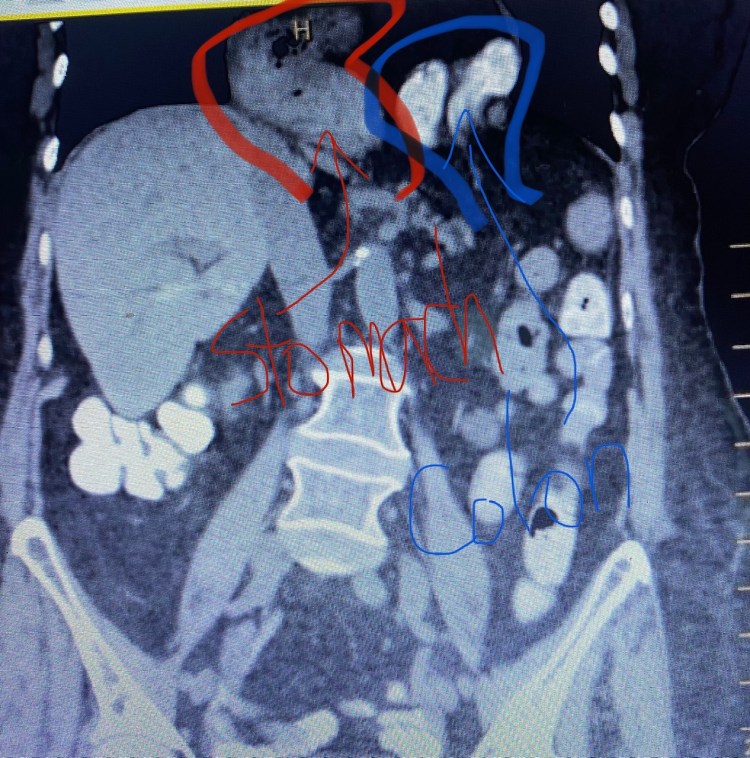
Luckily, minimally invasive techniques have allowed us to treat these with a much higher success rate, shorter hospitalization, and faster return to regular diet.
Recently, I have had the pleasure of taking care of a wonderful woman who for years was told that her hernia cannot be fixed. Unfortunately, with age she also developed worsening heart disease. This not only made her higher risk for surgery, but was actually being exacerbated by her hernia. Her stomach has migrated behind her heart and worsened her chest pain, shortness of breath, and congestion. It was during one such attack that she was evacuated from her home town of Lake Charles to our hospital due to weather conditions. I was consulted and was happy to offer her Robotic Laparoscopic Paraesophageal Hernia Repair. She tolerated the procedure phenomenally well, and was discharged two days after surgery tolerating her pureed diet and much improved from her chest pain.
It was such a pleasure to see her enjoy her meal.

